Short tutorials on column chromatography

>> January 30, 2013


If someone ever needed a tutorial for doing simple column chromatography for high-school or any other demonstration, Chemistry Views made some nice text discussing even 2D Thin Layer Chromatography !


Read more...

GC-MS chemist arrested - The Fukushima of forensics and the "Dry Labbing"

>> January 22, 2013

Recently chemist and chromatographer Annie Dookhan was arrested in Boston, Mass., USA and acused for tampering of evidence and justice obstruction.

Annie supposelly didn't test all samples but instead used the "dry labbing" procedure (I really never imagined they had a name for that!),  or just tested a few samples and list the other as positive.
It's not clear the reason she made this, if it was just to demonstrate efficience, she use to test 500 samples monthly while other analysts teste between 50 and 150. There's also an atipical involvement with a prosecutor, which is considered not ethic and even cause the suspect of an affair in Annie's husband.

What really surprise me is that she could over pass all the traditional Quality Assurance steps involved in today's analytical chemistry: Blind sample rounds, control charts and such. However, supposing that each analyst prepare his own sample if she contaminate the sample with cocaine before next chemist take the sample, there is no quality control can solve this.

Below is a description of possible routine in the Mass. Drug lab made by the Boston Globe:

Reproduction  from http://www.bostonglobe.com/
Sources:


Read more...

Old but Gold

>> December 14, 2012

Unknow author, animation by Fabiano Silva

Read more...

Curiosity update- false alarm

>> December 8, 2012

For those who were waiting a big announcement from NASA, you have to wait a little more for celebrate the discovery of life outside earth.

In a Press Release, NASA stated that beyond water and Sulfur compounds Curiosity found small organics like Chloromethane and Chloroform.

Although Cl was from Mars, it is not clear if the carbon is a contamination or native from the Martian soil.

Note: Martian soil is rich in perchlorates, which reacts with organic matter and can form these compounds.

Huffington post has covered the story:

Read more...

What Curiosity found?

>> November 22, 2012


The SAM analytical suit is already working and according to WIRED, big news are expected for the next days. Most expeculation go around organic compounds.
An official Press conference will be held in early December. Let´s see...


Read more...

Curiosity - GC and life on mars

>> November 11, 2012


Recently the entire world became more curious about Mars. Everyday we receive a bunch of self portraits of The car sized probe curiosity. Specially equipped with a Wall-E style camera head, Curiosity went to Mars trying to solve a 30 years discussion: is there life in Mars right now?

Everything started with a experiment in which radioactive water was put in contact with Martian soil by the Viking probe in the 80's.  The experiment detected radioactive CO2, that could only come from microorganisms utilizing the radioactive water in their metabolism. However, the gas chromatography couldn't detect any organic molecule in soil, that's a paradox.

This time, curiosity has a unique arsenal of analytic techniques to analyse air and soil. Beginning with highly sensitive quadrupole mas spectrometers and series of chromatographic columns able to separate permanent gases, short organic chains and aminoacids derivatives.

The SAM sample analysis at Mars, counts with a highly sensitive mass spectrometer and thermal conductivity detector, so sensitive as a bench top earth equipment, the mass spectrometer detects up to 1 ppb of organics.

Strangely, most of equipment in SAM came from French research facilities like the  Laboratoire Inter-Universitaire des Systemes Atmospheriques (LISA). No prejudice intended to French chromatographers but  just never imagined that NASA would outsource analytical instruments.

I feel strangely proud in read that all this technologies are kind very know and I even made use of some of them. like the chemical derivatization. (Don't ask me why but NASA/LISA prefer MTBSTFA rather than BSTFA)

Take a look of the actual SAM photos and some technical (and geek) information:
Sample carousel with metal and quartz cups for pyrolysis and wet chemistry experiments 
Sample carousel equipped with all Quartz cup. Some of them carry standard mix for on-site calibration purposes
Capillary columns used in SAM. For a list on Stationary phases see table 1.
 Table 1
Columns used in SAM module on Curiosity probe.
Table 2
Standards in glass cell used for test performance and for mass spectrometer calibration

Source:

Mahaffy et al, Space Sci Rev (2012) 170:401–478

http://www.geochemsoc.org/publications/geochemicalnews/gn141oct09/sampleanalysisatmars.htm

http://fingerprintsoflife.pbworks.com/f/cabane2004.pdf

http://www.springerlink.com/content/p26510688kg4q808/

http://www.astrobio.net/exclusive/2765/making-sense-of-mars-methane

Read more...

TLC in middle age

>> May 14, 2012

Found this by accident on Youtube, a TLC company designed a fun short film describing the possible applications of TLC, in the middle age!


Read more...

Strange places to find a chromatographer - Part VI: Art gallery

>> May 7, 2011


No, we are not the artists. At least, not yet.

Long time ago I met a chemist teaching conservation techniques at an art school. I was amused by the chemistry background contained at Incognito, and wondered what in that movie was real.
Although not involved in chromatography yet, I started to notice how much analytical chemistry is applied to studies of works of art, or the forgery. 
  
Maybe the most famous case is from Hans van Meegeren, who is considered the master of forgery. van Meegeren developed a number of techniques to overcome the natural ageing  of paintings.
He was arrested in 1945 and sentenced to a year in prison, but had a heart attack and died before.

In paintings the pigment are holded by the binders which can be proteins or oils, Ok but where's chromatography? well, van Meegeren used a Phenol-Formaldehyde resin to simulate the old binders, but this didn't exist 300 years ago. however only in 1975 that technology was abble to track back what kind of binder he had used using GC and pyrolisis to break down the monomers and analyse the result by chromatography.

Today, the research for the binders is well stablished, and discover what the artist used is just a matter of sample prepation.
  
Interesting reading:
Characterisation of proteinaceous binders and drying oils by GC-MS, Journal of Chromatography A, 846 (1999) 113–124

Identification of lipid binders in paintings by gas chromatography, Journal of Chromatography A, 922 (2001) 385–390

Read more...

Strange places to find a Chromatographer - Part V - At the school, teaching.

>> April 30, 2011


Photo by US FDA flickr page
Most universities include chromatography in analytical chemistry classes, but we all know that this is far from enough to one really learn the craft. Dr. Grob have a perfect paper about this subject I republished here.

But in my own experience, have someone with a experimental background in chromatography is essential even to learn the basics. Once we had a "experienced" teacher with a Ph.D in Mass spectrometry who clogged a column injecting 50uL of a painkiller pill solution without filter it. 

I insist that chromatography is different from all analytical techniques. Is far more full of details and variables than others. Is also the more versatile, and , to be able to use all these advantages someone need the "side thinking" and understand globally what is happening.
How many times I saw someone taking a method for TMS derivatives and running the raw compound at the GC!

University is not the only place as teaching can be the primary activity of this chromatographer. Many independent companies that teach the "troubleshooting", "method validation" and "basic LC" courses employ experienced analyst to discuss and transmit the knowledge everybody need.
Some companies have even, online teaching, where you can have some webcasts that discuss gradient elution, HILIC caracteristics and such.

As you can see, it's not so difficult see a chromatographer working in teaching.

Read more...

The disguised chromatograph, part III: Space surveyor

>> April 22, 2011


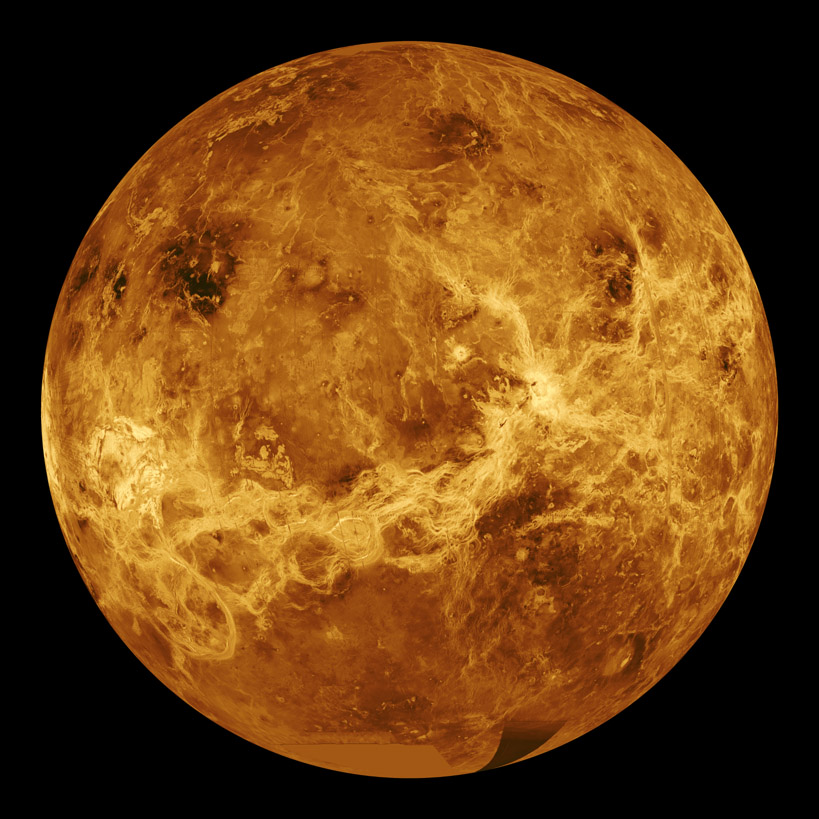
VENUS, Photo by NASA

Gas Chromatography is as a well stablished technique, with many in situ applications and robust instruments. That's way it's was chosen to complete the apparatus of many spacecraft probes sent to Venus, Mars and Titan. To test the atmosphere and soil.

One of the most important informations about planet that we need is the compostion of atmosphere. This data can explain geological history, and give evidences of life forms in present or past. To achive this, the chromatographs in 70's and 80's used adsorption column most based in Porapak polymer, and all of them packed. As noted in the table below, after the 90's the use of capillary Wall Coated Open Tubular, the actual standard for gas chromatography was more used. Not just a matter of resolution but the weight and economics was an a great inprovement, since to put 1 kg at orbit cost about US$11,000.


Space probes equiped with chromatographs


     Mission   Launch  Column used     Detector    
NASA/ VIKING1976/1977

1978/1978
Two Porapak Q (7.6 m x 1 mm)

One Tenax coated with polymetaphenoxylenex (2 m)
TCD

MS
NASA Pioneer-Venus1978/1978 
Porapak N (15.85 m x 1.1 mm) 
 TCD
USSR Venera -VEGA/ Venus 1978/1985
Polysorb (2 m),molecular sieve (2.5 m), Porapak T, Porapak QS. All of them packed
 Ne ionization

NASA/ESA  Cassini–Huygens Titan, largest satellite of Saturn
 1997/2004 Carbon molecular sieve and  CNPP-DMPS, two WCOT (0.18mm) and one packed (0,75mm) GC–MS/ Ion trap
ESA Rosetta COSAC/
Comet Wirtanen
2003/2011
In parallel: carbon molecular sieve, DVB-styrene,DMP, three chiral columns, all  of them with ID inferior to 0,25mm

Eight nano-TDCs and TOF-MS


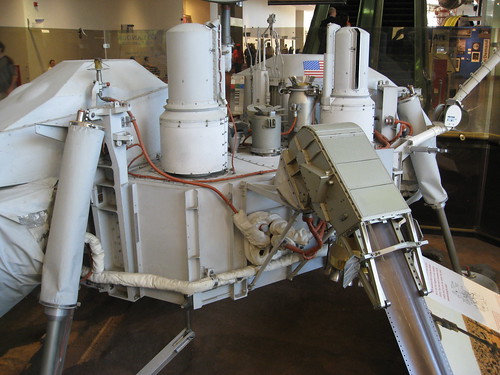
Note: I found this photograph on flickr with the exactly position of Gas Chromatograph at the probe.


Source:

-Gas chromatography in space, Journal of Chromatography A, 843 (1999) 147–162.
-Development and Analytical Aspects of Gas Chromatography for Space Exploration, LCGC Europe - February 2001.
-NASA Website: http://www.nasa.gov/

Read more...