Strange places to find a chromatographer - Part VI: Art gallery

>> May 7, 2011


No, we are not the artists. At least, not yet.

Long time ago I met a chemist teaching conservation techniques at an art school. I was amused by the chemistry background contained at Incognito, and wondered what in that movie was real.
Although not involved in chromatography yet, I started to notice how much analytical chemistry is applied to studies of works of art, or the forgery. 
  
Maybe the most famous case is from Hans van Meegeren, who is considered the master of forgery. van Meegeren developed a number of techniques to overcome the natural ageing  of paintings.
He was arrested in 1945 and sentenced to a year in prison, but had a heart attack and died before.

In paintings the pigment are holded by the binders which can be proteins or oils, Ok but where's chromatography? well, van Meegeren used a Phenol-Formaldehyde resin to simulate the old binders, but this didn't exist 300 years ago. however only in 1975 that technology was abble to track back what kind of binder he had used using GC and pyrolisis to break down the monomers and analyse the result by chromatography.

Today, the research for the binders is well stablished, and discover what the artist used is just a matter of sample prepation.
  
Interesting reading:
Characterisation of proteinaceous binders and drying oils by GC-MS, Journal of Chromatography A, 846 (1999) 113–124

Identification of lipid binders in paintings by gas chromatography, Journal of Chromatography A, 922 (2001) 385–390

Read more...

Strange places to find a Chromatographer - Part V - At the school, teaching.

>> April 30, 2011


Photo by US FDA flickr page
Most universities include chromatography in analytical chemistry classes, but we all know that this is far from enough to one really learn the craft. Dr. Grob have a perfect paper about this subject I republished here.

But in my own experience, have someone with a experimental background in chromatography is essential even to learn the basics. Once we had a "experienced" teacher with a Ph.D in Mass spectrometry who clogged a column injecting 50uL of a painkiller pill solution without filter it. 

I insist that chromatography is different from all analytical techniques. Is far more full of details and variables than others. Is also the more versatile, and , to be able to use all these advantages someone need the "side thinking" and understand globally what is happening.
How many times I saw someone taking a method for TMS derivatives and running the raw compound at the GC!

University is not the only place as teaching can be the primary activity of this chromatographer. Many independent companies that teach the "troubleshooting", "method validation" and "basic LC" courses employ experienced analyst to discuss and transmit the knowledge everybody need.
Some companies have even, online teaching, where you can have some webcasts that discuss gradient elution, HILIC caracteristics and such.

As you can see, it's not so difficult see a chromatographer working in teaching.

Read more...

The disguised chromatograph, part III: Space surveyor

>> April 22, 2011


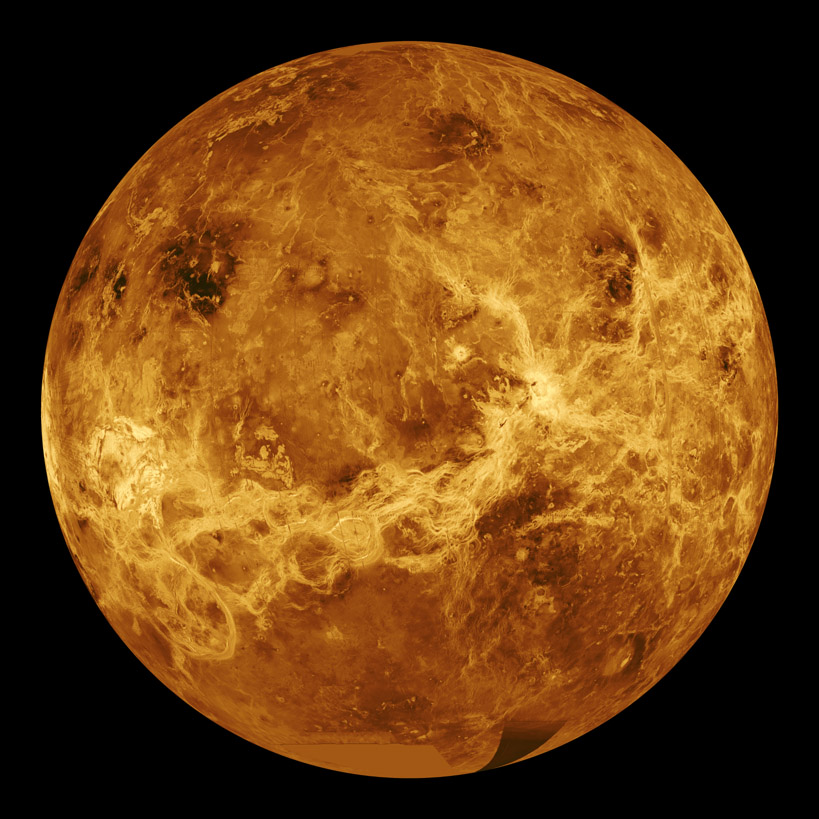
VENUS, Photo by NASA

Gas Chromatography is as a well stablished technique, with many in situ applications and robust instruments. That's way it's was chosen to complete the apparatus of many spacecraft probes sent to Venus, Mars and Titan. To test the atmosphere and soil.

One of the most important informations about planet that we need is the compostion of atmosphere. This data can explain geological history, and give evidences of life forms in present or past. To achive this, the chromatographs in 70's and 80's used adsorption column most based in Porapak polymer, and all of them packed. As noted in the table below, after the 90's the use of capillary Wall Coated Open Tubular, the actual standard for gas chromatography was more used. Not just a matter of resolution but the weight and economics was an a great inprovement, since to put 1 kg at orbit cost about US$11,000.


Space probes equiped with chromatographs


     Mission   Launch  Column used     Detector    
NASA/ VIKING1976/1977

1978/1978
Two Porapak Q (7.6 m x 1 mm)

One Tenax coated with polymetaphenoxylenex (2 m)
TCD

MS
NASA Pioneer-Venus1978/1978 
Porapak N (15.85 m x 1.1 mm) 
 TCD
USSR Venera -VEGA/ Venus 1978/1985
Polysorb (2 m),molecular sieve (2.5 m), Porapak T, Porapak QS. All of them packed
 Ne ionization

NASA/ESA  Cassini–Huygens Titan, largest satellite of Saturn
 1997/2004 Carbon molecular sieve and  CNPP-DMPS, two WCOT (0.18mm) and one packed (0,75mm) GC–MS/ Ion trap
ESA Rosetta COSAC/
Comet Wirtanen
2003/2011
In parallel: carbon molecular sieve, DVB-styrene,DMP, three chiral columns, all  of them with ID inferior to 0,25mm

Eight nano-TDCs and TOF-MS


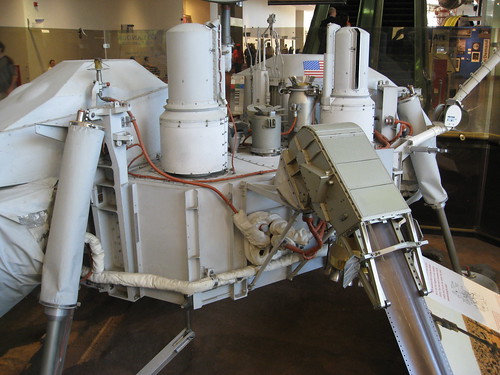
Note: I found this photograph on flickr with the exactly position of Gas Chromatograph at the probe.


Source:

-Gas chromatography in space, Journal of Chromatography A, 843 (1999) 147–162.
-Development and Analytical Aspects of Gas Chromatography for Space Exploration, LCGC Europe - February 2001.
-NASA Website: http://www.nasa.gov/

Read more...

The disguised chromatograph, part II: The Amino Acid Analyzer

>> March 28, 2011

The history of Amino Acid Analysis (AAA) is the history of chromatography itself, just before Martin and Synge win the Nobel Prize for the Partition Chromatography (1952) Stein and More were working on Amino Acid separation using starch columns (1948). But that can be the subject of another post.

The important is that, since the 50's the formula didn't change too much. The automated analyzer is still a chromatograph with post column reaction and UV (ultra-violet) or Visible detection.
Using a mobile phase gradient to separate the mixture, these aparatus changed from glass packed tubes into automated systemns controled by computer and with much more fast, accurate and practical tools.
Today standard for AAA is ion exchange columns for LC and capillary GC of Amino acids derivatives.
Some companies as Phenomenex supply kits for sample preparation, calibrators and columns. For GC and HPLC equipments. So you can run all amino acids in a non-dedicated equipment.
Take a look how things improved in last 60 years!

Chromatograms from Stein and More experiments in the 50's, the could take days to run a single sample. 
Modern analysis using high-end equipment. in two hours you can separate more than 50 peaks.

Schematic of the automatic recording apparatus used in the chromatographic analysis of mixtures of amino acids.   Spackman, D. H., Stein, W. H., and Moore, S. (1958) Anal. Chem. 30, 1190–1206
Hitachi's Amino Acid Analyzer with tray for 200 vials


Read more...

The disguised chromatograph, part I: CHN analyzer

>> March 19, 2011

An important academic research tool that I rarely heard about in industry is the CHN anayser. Any Organic/Synthetic chemist know that in some applications CHN are so important as NMR or Mass Spectrometry, but what many people doesn't know is that CHN is a automatized chromatograph.

It works in following way:
The sample is heated at 1000 ºC and carbon, hydrogen and nitrogen converted to CO2, H2O and NO2, after reduction of NO2 to N2 through a cooper catalyst, the gases are separated and measured with a thermal conductivity detector.
In the end you have the final percentage of each element like: C: 45%, H: 8% and N: 47%.
Some models also detect Sulfur as SO2.

Read more...

Advertizing from 30 years ago.

>> March 12, 2011

Analytical Chemistry, 1981.
When I look at this, I love my Windows programs!

Read more...

The Green chromatographer, part II - Narrow bore columns

>> March 7, 2011

The biggest enviromental concern about liquid chromatography is the waste. The widely used reversed-phase mode uses organic solventsto modify an aquous mobile-phase (MP) and elute the analytes.
The most used solvents, Methanol and Acetonitrle are toxic to environment, and shoud be, "in theory", incinerated.

Much better than giving a proper destiny to you waste, decrease its amount is a much better approach.

The Narrow bore (>4mm id)  and Microcolumn (>1mm id) LC rely on the smaller internal diameter columns, that work with a lower flow.
Narrow bore columns can work on normal HPLC equipments while Microcolumn LC need special low volume conections.
Running samples from a 4.6mm id column to a 2mm will decrease you flow 5 times! from 1ml/min to 0.2 ml/min!
The flow is proportional to the are from column, if you decrease the internal diameter to half, the cross sectional area will decrease about four times.

Just take a look at most common column diameters and the cross sectional area:

While the 4 mm id column have an area of 12.5  mm² uses 1 ml/min of  MP, the 2 mm id column has 3,1 mm² of area and requires 0.25 ml/min of MP.
The very economic 1 mm id column with 0.78 mm² only need 0,062ml/min to run in the same linear velocity.
NOTE: I 'm considering that packing is the same as the instrumental.


Example:
Fatty acids analysis on HPLC with 2.1 mm id C18 column, 85% MeOH at 0.2 ml/min.

F.O. Silva, V. Ferraz / Talanta 68 (2006) 643–645


Good luck!!

Peaks are: 1, linoleic + myristic; 2, linoleic; 3, palmitic; 4, oleic; 5, elaidic; 6, margaric (internal standard); 7, stearic phenacyl ester.


Read more...

The Green chromatographer, part I - 12 principles of green chemistry

>> February 20, 2011

The greening of chemistry has now reached of the Chromatography. Methods, equipments and supplies are now focusing on the many aspects of environment conservation. More than just follow the current fashion, analysts can improve their work with aspects such carbon credits or the four R's of recycling (Reduce, Reuse, Recycle, Recover).

To start let's take a look on EPA's 12 rules about green chemistry. After that,  the discussion about all technologies that may help you to put your chromatogram greener such as mobile phase recycling, high temperature elution, narrow bore columns, New packings and miniaturization will become much clear.

The 12 principles of green chemistry from EPA and some possible ways for incorporation on analytical laboratory:

1.Prevention
It is better to prevent waste than to treat or clean up waste after it has been created.
Simple, instead to create waste, modify your methods.

2.Atom Economy
Synthetic methods should be designed to maximize the incorporation of all materials used in the process into the final product.
Don't prepare more mobile phase than what is really necessary, if you can not store it, you are just creating more waste.

3.Less Hazardous Chemical Syntheses
Wherever practicable, synthetic methods should be designed to use and generate substances that possess little or no toxicity to human health and the environment.
If conditions are apropriate, prefer less hazardous solvents like Ethanol instead of Acetonitrile.

4.Designing Safer Chemicals
Chemical products should be designed to effect their desired function while minimizing their toxicity.
Same idea as above.

5.Safer Solvents and Auxiliaries
The use of auxiliary substances (e.g., solvents, separation agents, etc.) should be made unnecessary wherever possible and innocuous when used.
What about exchange sample prepation that requires liquid-liquid extraction for a solid-phase extraction?

6.Design for Energy Efficiency
Energy requirements of chemical processes should be recognized for their environmental and economic impacts and should be minimized. If possible, synthetic methods should be conducted at ambient temperature and pressure.
If run times are reduced (for instance, using a narrow bore column), more samples can be analysed in same amount of time and spending same energy and equipment.

7.Use of Renewable Feedstocks
A raw material or feedstock should be renewable rather than depleting whenever technically and economically practicable.
Why not use pure water or ion exchange elutions instead of Reversed/Normal phase LC? for instance, if you have to analyse sugars you can exchange your old Amino-propyl column with (75% acetonitrile) for a ligand exchange that use only water as mobile phase, check alternatives here.

8.Reduce Derivatives
Unnecessary derivatization (use of blocking groups, protection/ deprotection, temporary modification of physical/chemical processes) should be minimized or avoided if possible, because such steps require additional reagents and can generate waste.
Huh, reduce preparation steps...I think we can translate this to simplify sample preparation steps!
Why instead of doing multiple dilutions, weight less in more precise balances and inject a smaller volume in micro-injectors such as the Valco ones.

9.Catalysis
Catalytic reagents (as selective as possible) are superior to stoichiometric reagents.
Not exactly catalytic but separations can be simplified with the creation of more selectives derivatives of high yield!

10.Design for Degradation
Chemical products should be designed so that at the end of their function they break down into innocuous degradation products and do not persist in the environment.
Although not "designed for degradation", organic solvents can be detoxified using many techniques. Acetonitrile can be hydrolyzed using NaOH to Amonia and acetic acid. This is much more like, assisted degradation.

11.Real-time analysis for Pollution Prevention
Analytical methodologies need to be further developed to allow for real-time, in-process monitoring and control prior to the formation of hazardous substances.
This is a hard one.

12.Inherently Safer Chemistry for Accident Prevention
Substances and the form of a substance used in a chemical process should be chosen to minimize the potential for chemical accidents, including releases, explosions, and fires.
Stop using Diazomethane!! Please!

Read more...

Operation Holiday - Integrating Gradients

>> February 6, 2011

At work, we had some problems during last year holydays due a basic skill that we lack: calculate the individual amount to mobile phase spent in a gradient analysis.
That's OK if you have some overnight runs but not so easy if you have to prepare 10 or 15L of mobile phase (MP) imaging a 5 day - 2 ml/min, 30 minutes gradient. We didn't want to prepare nothing 1 or 2 L beyond our use.

After think about the problem I found 2 possible solutions:

1-One way wold be the graphical method, dividing the gradient into several triangles and rectangles and integrating them. Basic geometry.


Remember that the area (%B/min) should be divided by 100 to gives the result in ml of B!
If your flow is diferent from 1, multiply by it!


2-Numeric integration using the trapezoid method.
This is much better, because can be automatized into a simple spreedsheet.
Before I found it I was using a interpolation method to generate the individual concentrations of my gradient between the points described in my SOP/Pharmacopeial monograph.


Following this formula, the spreadsheet calculate the area under the gradient curve between the points you type.
Results are identical


Now we can prepare very precise amounts of MP minimizing the waste!

Read more...

New Chromatography web sites and sources of information

>> January 30, 2011

LC-GC magazine and Crawford Scientific (UK) created a nice website intended be a social network for chromatographers including: tutorials, blogs, vendor news, applications, and much more.

They have a nice sequence of webcasts called "The CHROMacademy Essential Guide to…"  but each one it's free only during one month, after that you have to subscribe to access the archives.

 It really worth seeing, check it out:


The CHROMacademy Essential Guide to…. Hydrophilic Interaction Chromatography (HILIC) and Related Techniques (Part 1)
CHROMacademy (www.CHROMacademy.com) announces the next in our highly popular series of FREE LIVE TUTORIAL events hosted in conjunction with the CHROMmunity (http://chrommunity.chromacademy.com/).

Understanding HILIC and Related Techniques:
Just what is HILIC?
Fundamental HILIC and Mixed Mode
Retention Mechanisms
Optimizing Solvent Strength & Retention
The influence of pH
Buffers or additives or both?
Stationary Phases for HILIC and Mixed Mode Chromatography
pH, eluotropic and buffer strength
Gradients
Practical Issues / Column Equilibration

Read more...