Strange places to find a Chromatographer - Part V - At the school, teaching.

>> April 30, 2011


Photo by US FDA flickr page
Most universities include chromatography in analytical chemistry classes, but we all know that this is far from enough to one really learn the craft. Dr. Grob have a perfect paper about this subject I republished here.

But in my own experience, have someone with a experimental background in chromatography is essential even to learn the basics. Once we had a "experienced" teacher with a Ph.D in Mass spectrometry who clogged a column injecting 50uL of a painkiller pill solution without filter it. 

I insist that chromatography is different from all analytical techniques. Is far more full of details and variables than others. Is also the more versatile, and , to be able to use all these advantages someone need the "side thinking" and understand globally what is happening.
How many times I saw someone taking a method for TMS derivatives and running the raw compound at the GC!

University is not the only place as teaching can be the primary activity of this chromatographer. Many independent companies that teach the "troubleshooting", "method validation" and "basic LC" courses employ experienced analyst to discuss and transmit the knowledge everybody need.
Some companies have even, online teaching, where you can have some webcasts that discuss gradient elution, HILIC caracteristics and such.

As you can see, it's not so difficult see a chromatographer working in teaching.

Read more...

The disguised chromatograph, part III: Space surveyor

>> April 22, 2011


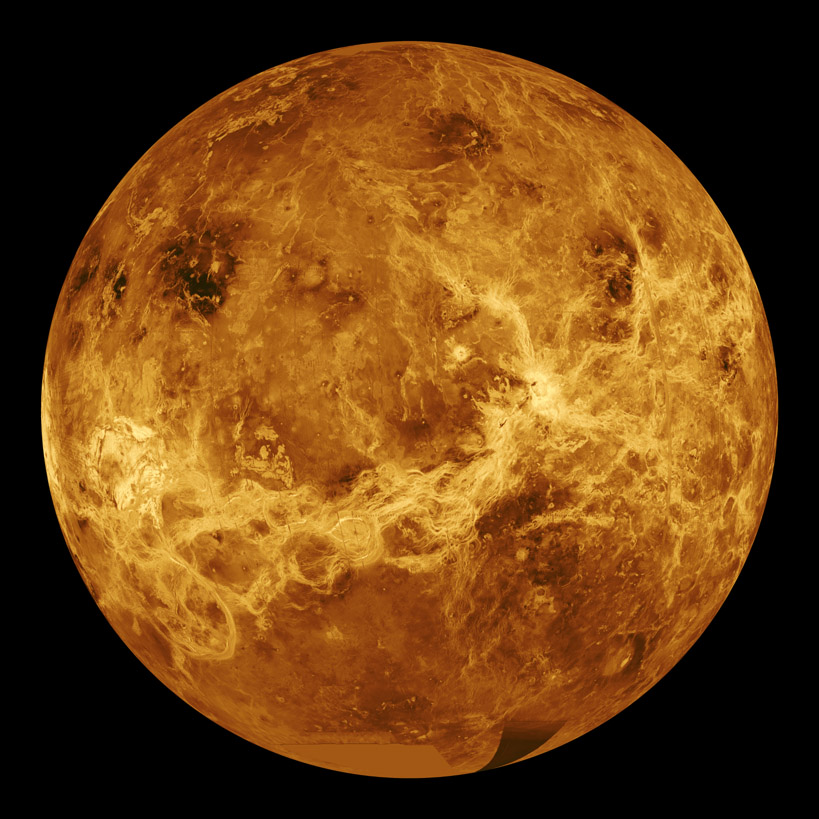
VENUS, Photo by NASA

Gas Chromatography is as a well stablished technique, with many in situ applications and robust instruments. That's way it's was chosen to complete the apparatus of many spacecraft probes sent to Venus, Mars and Titan. To test the atmosphere and soil.

One of the most important informations about planet that we need is the compostion of atmosphere. This data can explain geological history, and give evidences of life forms in present or past. To achive this, the chromatographs in 70's and 80's used adsorption column most based in Porapak polymer, and all of them packed. As noted in the table below, after the 90's the use of capillary Wall Coated Open Tubular, the actual standard for gas chromatography was more used. Not just a matter of resolution but the weight and economics was an a great inprovement, since to put 1 kg at orbit cost about US$11,000.


Space probes equiped with chromatographs


     Mission   Launch  Column used     Detector    
NASA/ VIKING1976/1977

1978/1978
Two Porapak Q (7.6 m x 1 mm)

One Tenax coated with polymetaphenoxylenex (2 m)
TCD

MS
NASA Pioneer-Venus1978/1978 
Porapak N (15.85 m x 1.1 mm) 
 TCD
USSR Venera -VEGA/ Venus 1978/1985
Polysorb (2 m),molecular sieve (2.5 m), Porapak T, Porapak QS. All of them packed
 Ne ionization

NASA/ESA  Cassini–Huygens Titan, largest satellite of Saturn
 1997/2004 Carbon molecular sieve and  CNPP-DMPS, two WCOT (0.18mm) and one packed (0,75mm) GC–MS/ Ion trap
ESA Rosetta COSAC/
Comet Wirtanen
2003/2011
In parallel: carbon molecular sieve, DVB-styrene,DMP, three chiral columns, all  of them with ID inferior to 0,25mm

Eight nano-TDCs and TOF-MS


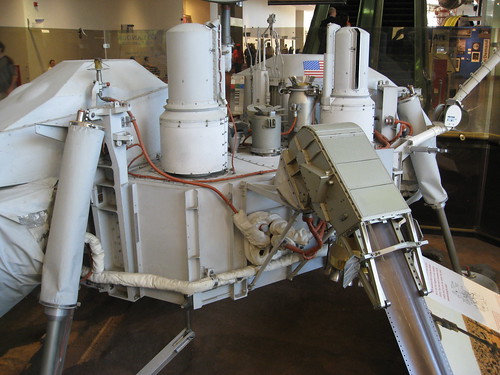
Note: I found this photograph on flickr with the exactly position of Gas Chromatograph at the probe.


Source:

-Gas chromatography in space, Journal of Chromatography A, 843 (1999) 147–162.
-Development and Analytical Aspects of Gas Chromatography for Space Exploration, LCGC Europe - February 2001.
-NASA Website: http://www.nasa.gov/

Read more...